
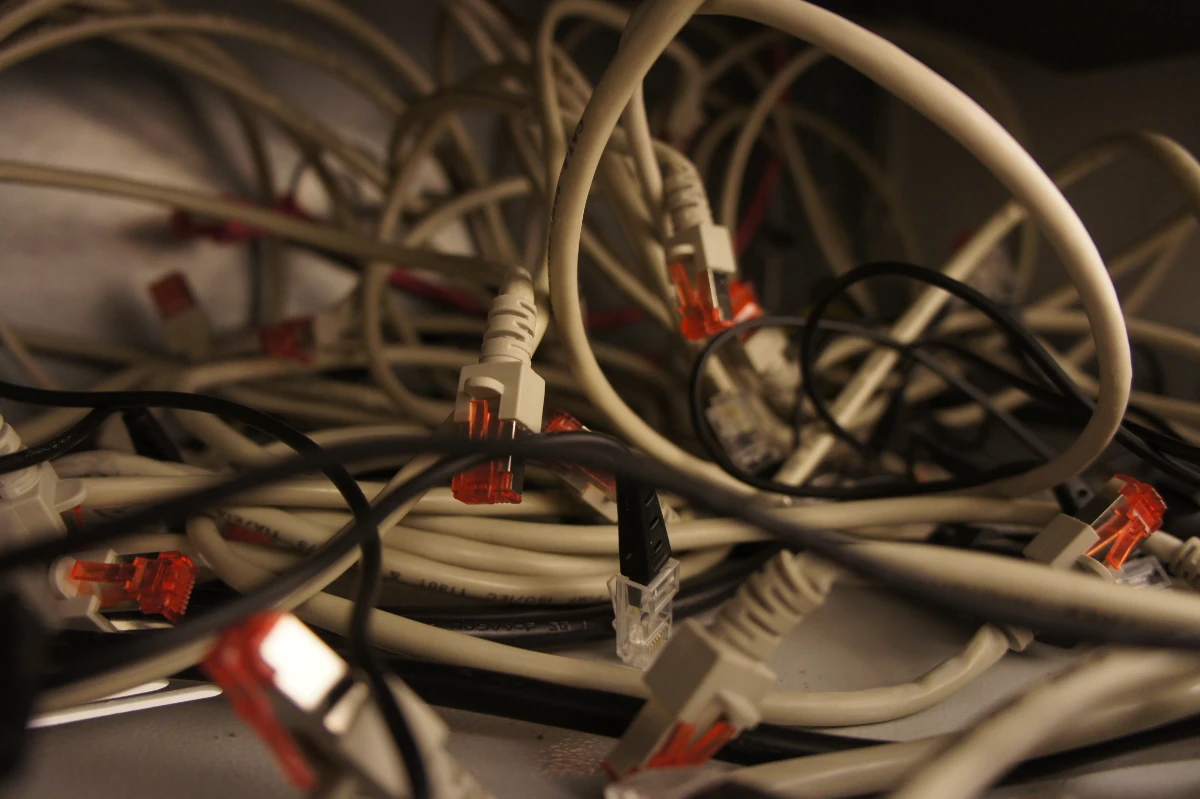
— Poor-quality or mismatched Ethernet cabling can cap performance and create packet loss. You must validate physical layers early.
Behind every high-performing Wi-Fi network lies a solid wired foundation — and often, that foundation is overlooked. Many network issues that appear to be “wireless problems” actually originate in the physical cabling. Poor-quality or mismatched Ethernet cables can severely limit performance, cause intermittent connectivity issues, and introduce packet loss long before wireless signals come into play. Simply put, even the most advanced access points can’t perform to their potential if the cabling that feeds them isn’t up to standard.
One of the most common mistakes in network deployments is using the wrong category of Ethernet cable for the job. For example, using older Cat5e cables in a high-speed Wi-Fi 6E or Wi-Fi 7 deployment can cap throughput at 1 Gbps, even though the AP and switches may support multi-gigabit speeds. Similarly, long cable runs that exceed recommended distances — typically 100 meters for Ethernet — can lead to signal degradation and increased latency. Low-cost or poorly shielded cables also struggle in environments with electrical interference, causing packet corruption that can disrupt applications and degrade performance over time.
Inconsistent cabling standards across installations are another silent killer of network reliability. Mixing copper and fiber without proper grounding, using substandard connectors, or failing to crimp and test terminations properly can all result in intermittent disconnections or speed fluctuations. These issues are notoriously difficult to diagnose later because they often appear random — a few dropped packets here, a few seconds of lag there — but they ultimately undermine the stability of the entire system.
The best way to avoid these pitfalls is to validate the physical layer early in the design and installation process. Before configuring switches and access points, every cable run should be tested for continuity, length, signal integrity, and noise levels using certified testing tools. This ensures that the infrastructure can handle the expected load, whether it’s gigabit or multi-gigabit Ethernet. Investing time in proper cable testing upfront prevents far more costly troubleshooting down the line.
In conclusion, cabling may be the least visible part of a network, but it’s one of the most critical. Poor-quality or mismatched Ethernet cables can silently cap your network’s performance, no matter how advanced your wireless technology is. By validating the physical layer early and adhering to cabling standards, you create a robust foundation that supports stable, high-speed connectivity — ensuring that your Wi-Fi performs exactly as designed, without hidden limitations.